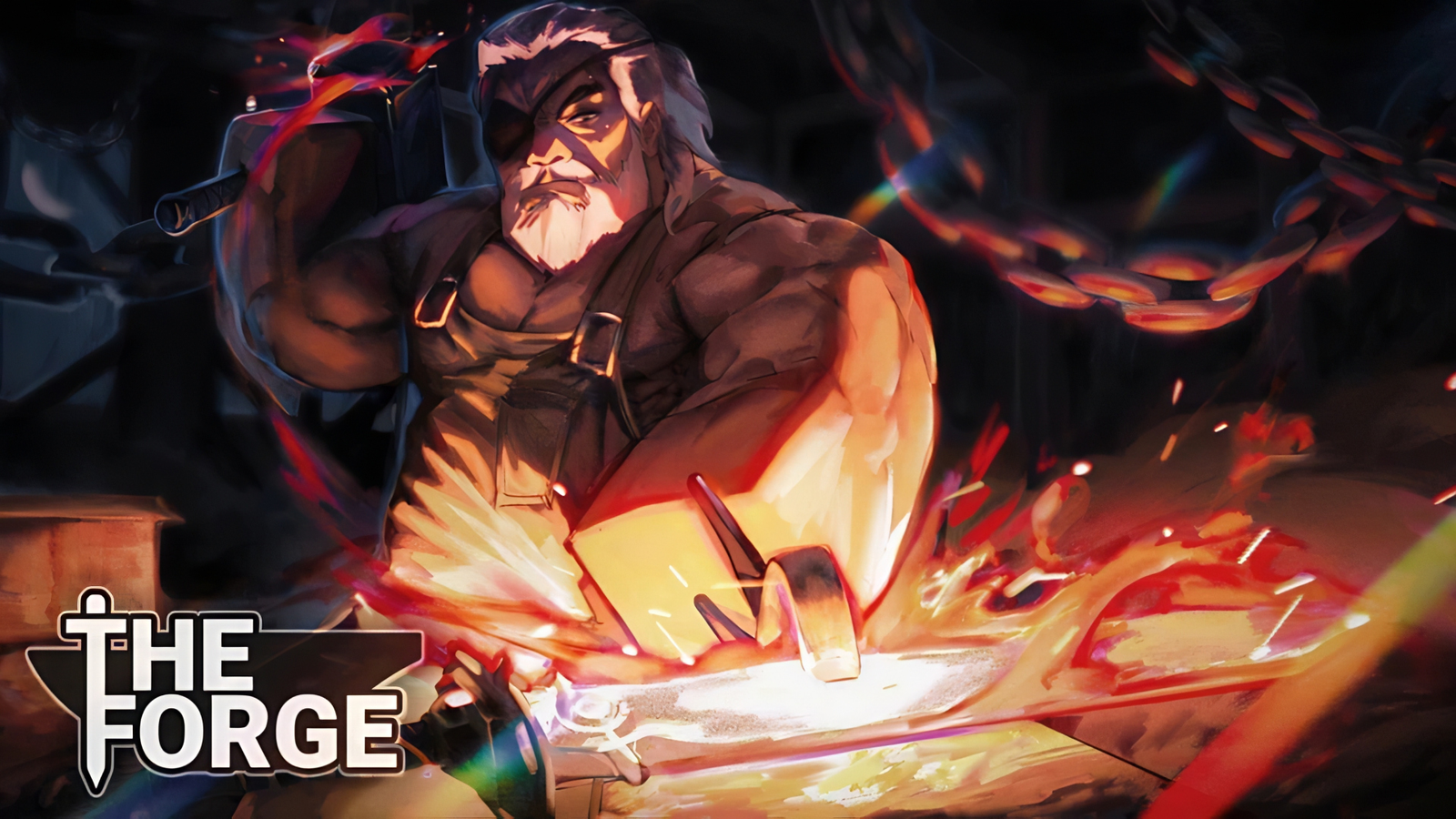
This article describes a polished feature set for a Roblox “Forge”-style game — a mining/fighting loop focused on collecting ores, fighting monsters, managing resources, and traveling the world. It lists each feature, describes player benefits, and gives high-level developer notes on how to design and implement them ethically and securely.
Full Script features list (player-facing)
Ore Farm (legitimate in-game system)
Players mine nodes for ores (common → legendary). Nodes respawn on a schedule and can be upgraded or bought with in-game currency.
QoL features: auto-collect toggle for gathered ores (client asks server to pick up), visual node rarity indicators, and loot preview.
Monster Farm (PvE content loop)
Monster spawners in zones that scale with player level or zone difficulty. Defeating monsters yields experience, ores, crafting materials, and occasional drops.
Monster waves, boss spawns, and daily events.
Farm Webhooks (analytics & external notifications — server-side)
Developer/owner webhook hooks that send safe, aggregated analytics or event notifications (e.g., “farm event completed”, “boss defeated”) to a server for dashboards or Discord alerts. Configurable and rate-limited to avoid abuse. Server-only — never expose player credentials or personal data.
Auto-Purchase Potions (quality-of-life shop automation)
A QoL option that uses a player’s in-game currency to auto-replenish consumables from the shop when below a threshold. Player opt-in only. Helps with convenience but can be limited to avoid economic imbalance.
Auto-Use Potions (client-side convenience with server validation)
Toggles that automatically use potions when health/other stats fall under a threshold. Use purely as a player preference and validate all effects server-side to prevent abuse.
Auto-Sell Ores (market automation)
An in-game setting to automatically sell ores the moment they enter your inventory or when you’re at a vendor. Works with player permissions and configurable filters (sell common only, keep rare). Server validates transactions.
Player Teleports (player-initiated fast travel)
Teleport to owned spawn points, guild halls, or valid safe zones. Teleports are gated by cooldowns, zone rules, or resource costs (gems, tokens).
Shop Teleports
Quick access teleports to merchants/shops. May be free in safe hubs or cost a small fee from remote zones.
Location Teleports (predefined points)
Map markers or “travel beacons” that players discover and can fast-travel to. Discovery encourages exploration.
Proximity Teleports
Teleports that become available when players are physically near a beacon or safe area (useful for parties or group coordination).
Extras / “Some more stuff”
Player housing / furnace for smelting ores
Crafting and upgrade trees (weapons, pickaxes, tools)
Daily quests and achievements tied to farming and monster kills
Leaderboards and seasonal rankings (with prize chests)
Party / shared farming instances (instanced spawners for groups)
Cosmetic skins, emotes, and UI customization
Localized UI, accessibility options, and robust settings
Why these features matter (player experience)
Clear progression loop: Mine → fight → craft/sell → upgrade. Each feature nudges the loop toward clarity and reward.
Accessibility & QoL: Auto-purchase and auto-use features let players focus on strategy and fun, not micro-management — but they must be opt-in and balanced.
Exploration & mastery: Teleports reduce grind while still rewarding exploration (discover beacons, unlock shop teleports).
Social play: Party spawners and shared instances keep the game social rather than encouraging single-player automation.
High-level developer notes (safe, non-exploit guidance)
These are implementation suggestions for legitimate game development — do not use them to build cheats, bots, or to automate other players’ accounts.
Server-authoritative systems
Keep important state (inventory, currency, health) server-side. Clients should only send requests. The server validates and performs all final changes.
For auto-use/auto-sell features, make the client request the action and let the server enforce rules (cooldowns, costs, inventory limits).
Teleports & fairness
Teleports must check zone rules before execution (no teleport into restricted PvP areas, bosses, or raid instances).
Apply cooldowns, resource costs, or in-game gatekeeping (e.g., must unlock beacon) to avoid teleport abuse.
Consumables & automated behavior
Any automation (auto-purchase/use/sell) must be opt-in, clearly described in UI, and limited by cooldowns or server checks to prevent exploitation.
Log automated actions server-side for analytics and to detect suspicious behavior (spikes in automated sells or purchases).
Webhooks & external integrations
Webhooks should only transmit aggregated, non-PII data. Rate-limit and authenticate webhook receivers; owners should be able to toggle webhooks per event.
Use webhooks for admin notifications, event reporting, or analytics—not for controlling in-game state.
Anti-abuse and anti-cheat
Monitor for anomalous behavior (impossibly rapid ore accumulation, duplicate transactions).
Use server-side validation, signature checks for purchases, and rate limiting.
Provide a clear in-game reporting system and terms of service explaining that automated third-party scripts are forbidden.
Economy design
Prevent unlimited, cost-free automation: tie automation costs to convenience (minor fees, cooldowns), and design inflation controls (sink mechanics like upgrades, cosmetics).
Balance loot tables so auto-sell or auto-farm isn’t the only viable path — make gameplay skill and exploration meaningful.
Example user stories (how players might use features)
“I’m short on inventory space — I enable auto-sell for common ores and keep rare ores for crafting.”
“My party wants to farm boss waves together — we unlock a party spawner and set beacon teleports to coordinate.”
“I’m new — I enable auto-purchase potions so I don’t die while learning the map; later I turn it off for the challenge.”
Monetization & fairness (guidelines)
If you monetize, prioritize cosmetics, convenience, and optional boosters — avoid pay-to-win mechanics that unbalance the game.
Keep competitive leaderboards fair: disable paid automation advantages in ranked play.
🔥 Advanced Tricks of The Forge (Pro-Level Strategies)
Here are smart, legit strategies experienced players use to optimize mining, combat, and progression.
1. Ore Rarity Chain Trick
Clearing low-tier ores around high-tier zones increases the chance of better ores spawning later.
Do a quick “trash ore sweep” before entering rare zones for optimal respawns.
2. Perfect Rotation Timing
Most zones run on internal timers:
Ore respawn: 30–90 sec
Monster wave: 45–120 sec
Boss: every 5–15 min
Create a loop that hits every timer perfectly. Zero downtime = massive gains.
3. Potion Pre-Stacking Boost
Before entering a high-risk region, use:
Attack buff
Defense buff
Movement potion
Then immediately teleport to the target zone.
You start fights with full buff duration and maximum impact.
4. Beacon Leapfrog Travel
Instead of one long teleport, hop through intermediate beacons:
Shorter cooldowns
Faster movement
Safer entry points
Perfect for boss hunting or resource routing.
5. Material Funnel Strategy
Don’t hoard everything. Use this professional method:
Common → Sell
Uncommon → Crafting XP
Rare → Upgrades
Legendary → Special forging
This keeps your inventory clean and progression fast.
6. Proximity Teleports for Escape
If you’re surrounded or low on HP:
Step toward the nearest proximity beacon
Teleport instantly
Auto-use potion triggers
Return fully healed
A life-saving technique in elite zones.
7. Drop Multiplier Windows
Seasonal events dramatically boost:
Drop chance
XP
Rare loot
Save your hardest zones for these multiplier windows — efficiency skyrockets.
8. Monster Funnel Positioning
Stand slightly off-center when engaging mobs.
This forces enemies to cluster into one predictable lane, letting you:
Hit multiple targets with swing arcs
Dodge more easily
Clear waves faster
9. Crafting Power-Level Breakpoints
Upgrade your forge station first, not your weapon.
Forge tiers have hidden power breakpoints that massively increase upgrade success and bonus stats.
10. “Forge Rush” Early-Game Path
The fastest beginner progression:
Mine basic ores
Sell instantly
Buy potions
Unlock first beacon
Upgrade pickaxe
Move into mid-tier zones
Skips the slowest phase of the game.
11. Node Cluster Memorization
Ore nodes often spawn in clusters.
Mark them mentally or in your loop, and always return every 2–3 minutes for consistent income.
12. Emergency Teleport Combo
During near-death moments:
Teleport → auto-potion triggers → return
This prevents death penalties and preserves rare drops.
Hi, recently saw that you are looking to sell your adsense account with website, if so can you please contact e in whatssap : hee is my whatssap number : +212 657-738784 , or you could just leave here your number i will contact you personally, Thanks you!
ReplyDeletePost a Comment